
What Is Sea Moss and Why Is Everyone Taking It
What Is Sea Moss and Why Is Everyone Taking It
Sea moss is everywhere right now — in smoothies, supplements, gummies, and wellness routines across the globe. But what exactly is it, where does it come from, and does it actually live up to the hype? If you've been seeing sea moss pop up in your feed and want the real story, this post breaks it all down.
The Origins of Sea Moss
Sea moss is a type of red algae that grows along the rocky Atlantic coastlines of Europe, North America, and the Caribbean. The most widely recognized variety is Chondrus crispus, commonly called Irish sea moss. This particular species thrives in the cold, nutrient-dense waters off the coasts of Ireland, Iceland, and Eastern Canada, where it has been harvested and used for centuries.
Irish sea moss gained its first widespread recognition during the Irish Potato Famine in the 1840s. Coastal communities relied on it as a critical food source when crops failed and supplies ran scarce. Traditional Caribbean cultures have long incorporated sea moss into teas, tonics, and puddings, crediting it with everything from improved stamina to stronger immunity.
Today, sea moss is cultivated in pool farms and harvested wild. The distinction matters — wild-harvested sea moss absorbs minerals directly from the ocean, while pool-grown varieties may have a different nutritional profile. When you're shopping for sea moss supplements, the sourcing details tell you a lot about what you're actually getting.
Sea Moss Nutrition Profile and Mineral Content
One of the biggest reasons sea moss has earned superfood status is its mineral density. Sea moss contains 92 of the 102 minerals that the human body needs to function — a claim that sounds extraordinary, but one that's backed by its chemical composition.
The sea moss nutrition profile includes significant levels of iodine, iron, calcium, magnesium, potassium, zinc, and selenium. It also contains vitamins A, C, E, K, and several B vitamins. The carrageenan content — a natural soluble fiber — contributes to its thick, gel-like consistency and supports digestive health.
Here's a quick overview of what you get from a standard serving of sea moss:
Iodine: Critical for healthy thyroid function and metabolism regulation.
Iron: Supports oxygen transport and energy production in the blood.
Magnesium: Plays a role in over 300 enzymatic reactions in the body.
Potassium: Supports healthy blood pressure and proper heart function.
The sea moss mineral profile is genuinely impressive. Few single-source foods come close to delivering this density of bioavailable trace elements.
How Sea Moss Is Harvested and Processed
Raw sea moss is harvested from ocean rocks or cultivated in controlled Atlantic sea farms. After collection, it's sun-dried, cleaned, and processed into several different forms depending on the intended product.
Wild-harvested Chondrus crispus is typically darker in color — brown, purple, or green — depending on sun exposure and ocean conditions. The more sun-bleached, pale varieties often indicate pool-grown algae, which may be less mineral-rich. After harvest, sea moss is thoroughly rinsed to remove salt and debris before drying.
Processing determines the final product form. Raw dried sea moss requires soaking and blending before use. Gel is pre-made and ready to add to food or drinks. Powder is dehydrated and ground for easy mixing. Capsules and gummies deliver measured doses without any prep work. Each form retains the core sea moss nutrition, though processing methods can affect mineral concentration.
The Different Forms of Sea Moss Supplements
Sea moss supplements are now available in more forms than ever, making it easier to work into your routine regardless of lifestyle or preference. Here's what's on the market:
Raw Dried Sea Moss
This is the least processed option. You soak it for 12–24 hours, blend it with water, and store it as a gel. It requires the most prep but gives you full control over quality and concentration.
Sea Moss Gel
Pre-made sea moss gel skips the prep work. It can be stirred into smoothies, coffee, soups, or skincare applications. Shelf life varies; most gels last 2–4 weeks in the fridge.
Sea Moss Capsules and Powder
Sea moss capsules and powder offer precise, consistent dosing. Powder blends easily into beverages without significantly altering flavor. Capsules are discreet and portable.
Sea Moss Gummies
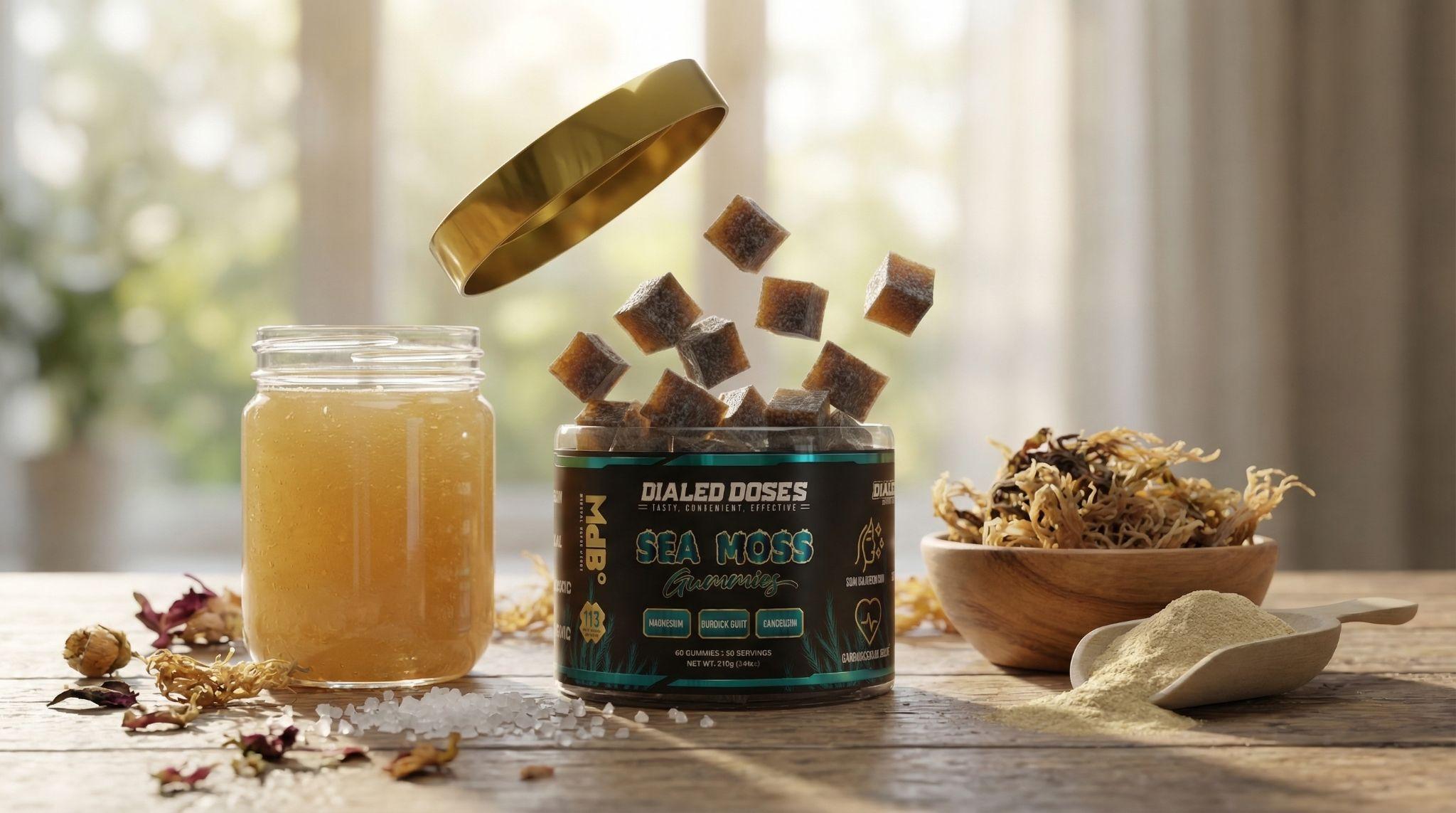
Sea moss gummies have become one of the most popular supplement formats. They're convenient, taste good, and often combine sea moss with synergistic ingredients like burdock root, bladderwrack, and dandelion. If you want the benefits without the prep or aftertaste, gummies are often the most realistic daily option.
What Is the Difference Between Sea Moss and Irish Sea Moss
"Sea moss" is a broad term that covers dozens of algae species harvested from oceans worldwide. "Irish sea moss" refers specifically to Chondrus crispus, the species native to the North Atlantic. It's the most studied variety and the one most commonly associated with traditional medicinal use.
Other popular sea moss varieties include Gracilaria, a tropical species often grown in pool farms in the Caribbean. Gracilaria is lighter in color and milder in flavor but may not have the same mineral density as wild-harvested Chondrus crispus. When purchasing sea moss products, paying attention to the species name ensures you're getting what the marketing claims.
Regular seaweeds like dulse, kelp, or nori are not the same as sea moss. While all are marine algae, sea moss has a distinct nutritional and textural profile. Its high carrageenan content makes it uniquely useful as a thickener and prebiotic fiber source.
Who Should Consider Taking Sea Moss
Sea moss is a strong fit for anyone looking to fill nutritional gaps, support thyroid function, improve gut health, or boost overall mineral intake. It's particularly useful for people who don't eat a wide variety of vegetables and seafood or who follow plant-based diets that can fall short on iodine and iron.
People dealing with chronic fatigue, skin issues, sluggish digestion, or immune challenges often report sea moss as a helpful addition to their supplement routine. That said, if you're on thyroid medication or have an iodine sensitivity, it's worth checking with a healthcare provider before adding high-iodine foods like sea moss to your daily intake.
How to Add Sea Moss to Your Daily Routine
The most sustainable approach is picking a format you'll actually stick with. Sea moss gel works well blended into smoothies, coffee, juices, and oatmeal. A tablespoon a day is a typical starting point.
Sea moss gummies are the easiest entry point, no prep, no taste adjustment, and they combine well with other botanicals. Many people find gummies fit naturally into an existing supplement routine without any friction.
Start with a lower dose for the first week and monitor how your body responds. Some people notice changes in digestion or energy relatively quickly; others take a few weeks to feel a difference. Consistency is what drives results with sea moss, not volume.